- Press Office
- Press releases
- Jean-Baptiste Raina appointed Director
Jean-Baptiste Raina appointed Director at the Max Planck Institute for Marine Microbiology
A generational change is taking place at our institute: In June 2026 Jean-Baptiste Raina will take office as director of the Max Planck Institute for Marine Microbiology (MPIMM). At 40 years of age, Raina will join our board of directors and extend our research focus with the field of chemical ecology. His goal will be to identify key microbial interactions in the ocean and understand how they support the health and productivity of marine ecosystems.
“It is a great honour to have recruited such a renowned researcher”, says Rudolf Amann, MPIMM’s managing director. “Raina’s research focus matches our institute’s current activities very well and will be a great asset. Moreover, with his friendly and open manner, he will also be a valuable addition to our team and our next generation of researchers.”
Bridging Microbiology, Chemistry and Biophysics in the Ocean
Jean-Baptiste Raina is a marine microbial ecologist working at the intersection of microbiology, chemical ecology and biophysics. Born in France, he completed his PhD in Australia and subsequently secured several fellowships, leading him to spend almost two decades conducting research in Australia, primarily at the University of Technology in Sydney. Most recently, he worked at the CNRS in Perpignan, France.
In his department, Raina will focus on the interactions between marine organisms and their microbial symbionts at the micrometre scale. This is essential for understanding how these microorganisms function and how they influence ecosystem processes. “Working at this tiny scale is challenging because it is a million times smaller than the spatial scale of most traditional sampling techniques in marine microbial ecology”, Raina explains. He has therefore developed and employed a variety of innovative methods that combine environmental microbiology, chemical ecology and biophysics to untangle microbial interactions at the microscale. By bridging the gap between microbiology and marine chemistry with direct in situ observations – directly in the marine environment –, Raina’s research has unravelled complex behaviours between microorganisms and provided new methods to study symbioses in the ocean.
“Empowered by my multidisciplinary background, my strong track record in research, project management and supervision, and my extensive network of collaborators, I have the expertise and experience to lead innovative research as a department director. My department will aim to identify key microbial interactions, measure their effects at the single-cell level, and evaluate how they impact marine ecosystems. At this stage of my career, I cannot think of a better place to continue my exploration of these questions than MPIMM. I’m extremely grateful for this opportunity and I’m really excited about what lies ahead”, Raina concludes.
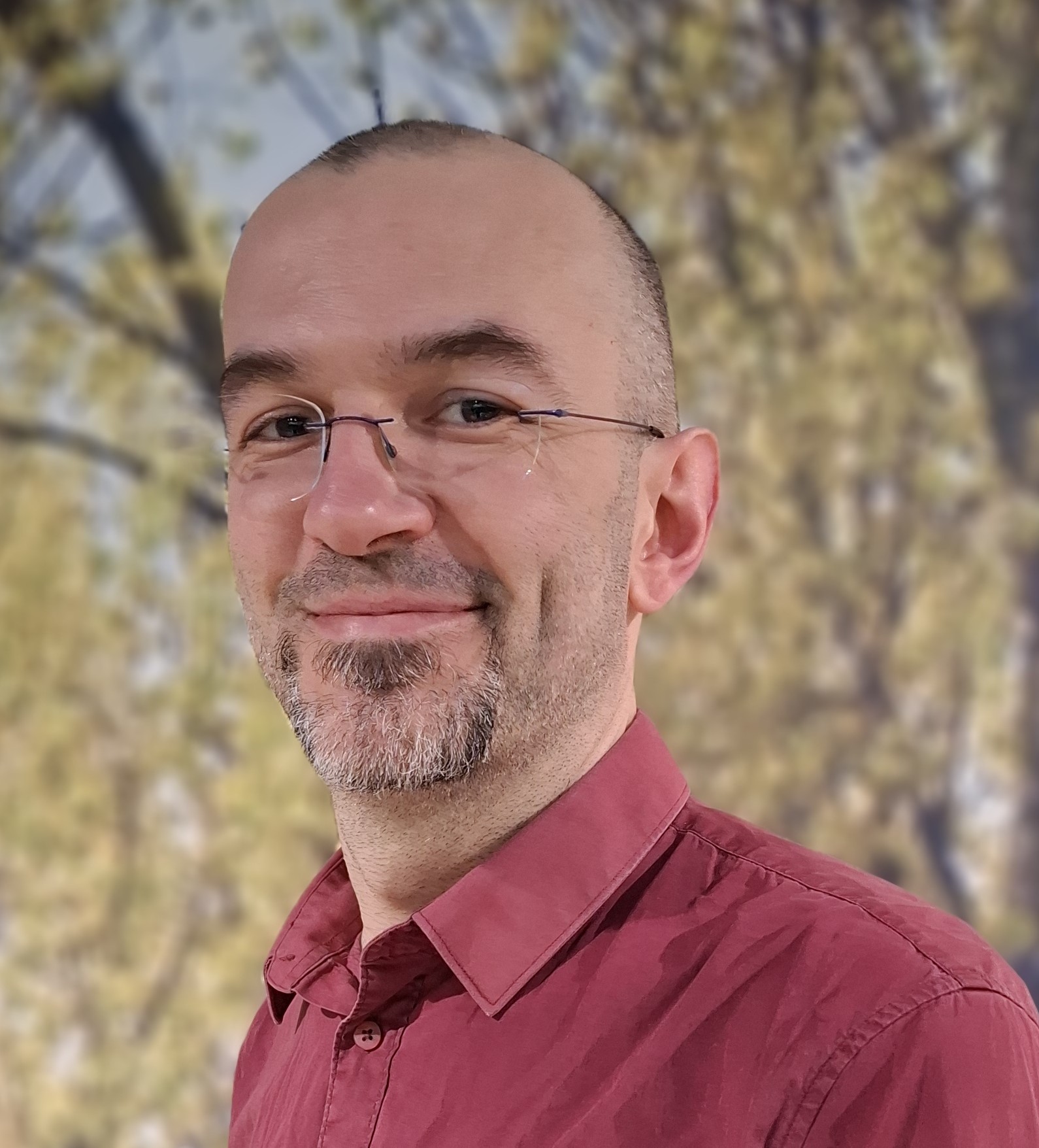
The current board of directors and all our employees welcome you and your team on board, Jean-Baptiste!
Please direct your queries to:
Head of Press & Communications
MPI for Marine Microbiology
Celsiusstr. 1
D-28359 Bremen
Germany
|
Room: |
1345 |
|
Phone: |
