- Press Office
- Press releases
- Mining a methane-degrading bioreactor for protein rubies
Mining a methane-degrading bioreactor for protein rubies
A methane-degrader that won’t go solo
Microbes are amazing chemists, performing reactions to recycle biological matter, depolluting environments, and contributing to Earth´s biogeochemical cycles. Among them are anaerobic methanotrophs, microbes that consume methane in oxygen-free environments. By preventing the release of this potent greenhouse gas into the atmosphere, they play an important role in mitigating climate change. However, studying the chemical reactions that these microbes carry out is challenging: They cannot be isolated and only thrive in complex microbial communities. In such a complex community containing the methane-devourers, Tristan Wagner from the Max Planck Institute for Marine Microbiology in Bremen, Germany, together with scientists from the Netherlands and France, has now unexpectedly discovered a new type of protein that encapsulates iron. The study was published in Communications Biology.
Mysterious rubies
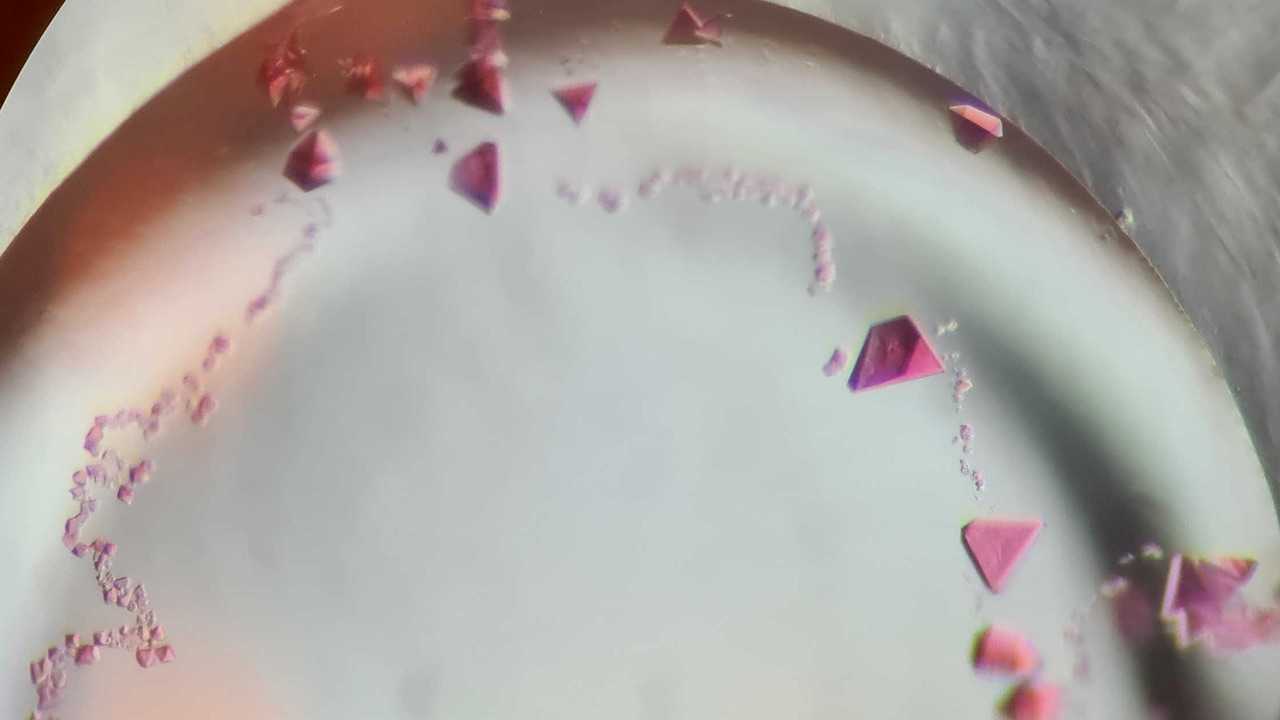
The journey began in a bioreactor at the Radboud University in the Netherlands, where a microbial community consuming methane happily grew without oxygen. After harvesting and shipping the cells to the Max Planck Institute in Bremen, scientists set out to study the molecular mechanisms behind methane degradation. When they broke open the cells and separated the different proteins from each other, they observed an intense ruby color. “We expected to observe this color, because we knew the organism used hemes – ring-shaped iron-containing molecules that bind to proteins for respiration”, says Martijn Wissink from the Radboud University, first author of the publication. “But we were surprised to find the ruby in so many different proteins.” Thus, the scientists from Bremen isolated one of the prominent ruby proteins and crystallized it to determine its three-dimensional structure. The experts from Radboud meanwhile determined the protein's identity.
A cage of iron and hemes
Tristan Wagner used X-rays from the European Synchrotron Radiation Facility to unravel the mystery of the ruby crystals. “At first glance, the protein structure looked familiar – it resembled ferritin, a well-known iron-storage protein,” senior-author Wagner recalls. “But then I noticed something extraordinary: There was a heme inside!”
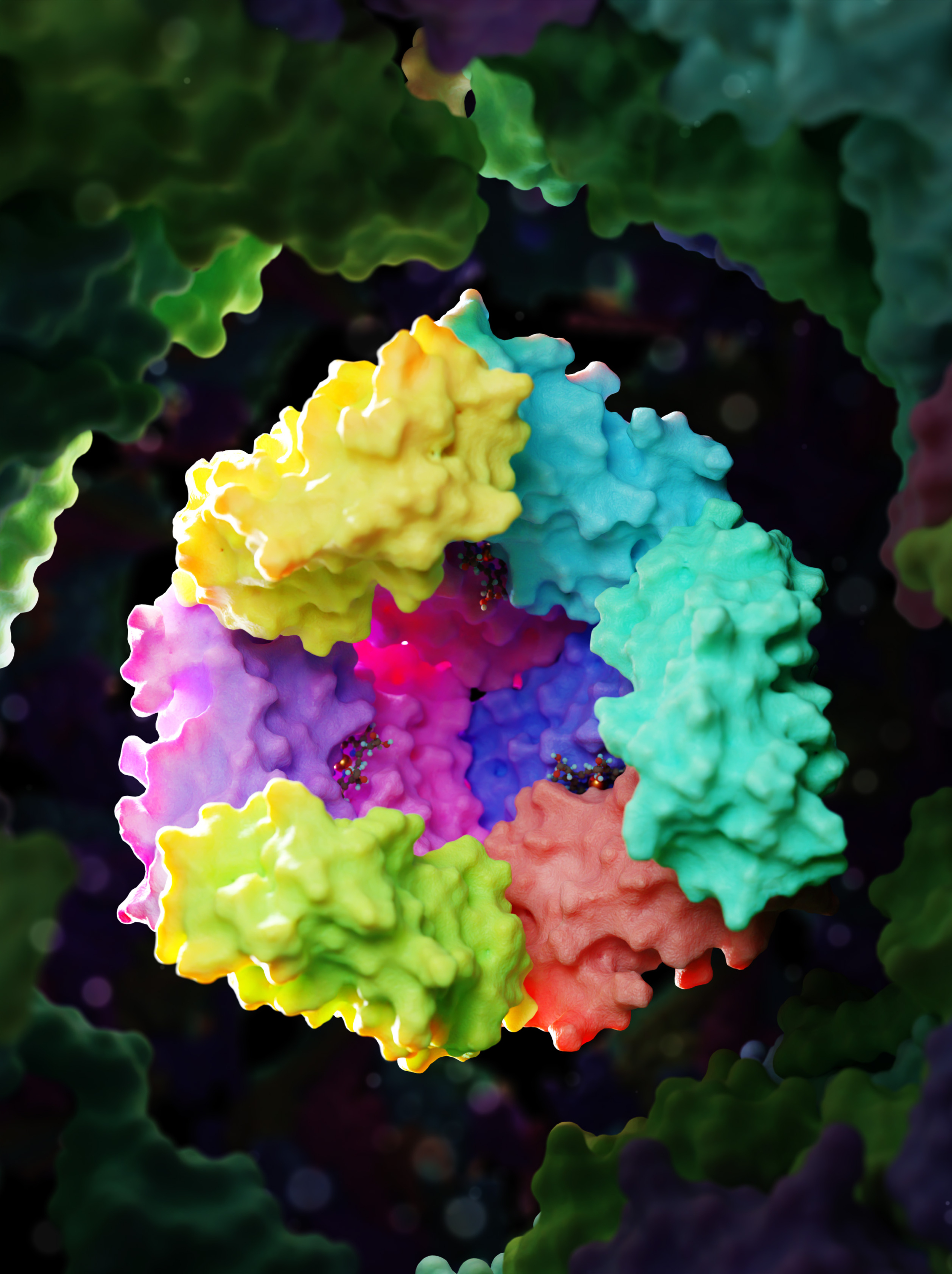
Unlike traditional bacterioferritins, which assemble into structures of 24 protein copies, this newly discovered protein forms a compact cage of just 12 copies, creating an entirely novel assembly. “Because of its small size, we named it ‘mini-bacterioferritin’,” Wagner explains. In a close collaboration, scientists from Radboud and the Institut de Biologie Structurale in Grenoble, France, thoroughly examined the new protein’s properties. They characterized the chemical identity of the heme, its capacity to incorporate iron, and its chemical reaction in the presence of oxygen – all of which resemble those of bacterioferritins.
A widespread protein with hidden functions
Despite their thorough investigation, the scientists are still puzzled by the true function of this protein. “The natural abundance of the mini-bacterioferritin in the methanotroph suggests a role beyond simple iron-storage or oxidative stress response,” says Cornelia Welte, co-senior author of the study. “Future research should focus on uncovering its true role in methanotrophs and other microbes.“
Genomic analysis revealed that mini-bacterioferritins are not unique to methanotrophs. They are widespread among microbes but have been overlooked until now. “The fact that such a widespread ferritin has just only been discovered underscores how much we still have to learn about microbial enzymes,” conclude co-authors Olivier Lemaire and Mélissa Belhamri, specialists in isolating and characterizing enzymes from anaerobic microbes in Grenoble who have previously worked at the Max Planck Institute in Bremen.
This discovery highlights the vast, unexplored potential hidden within microbial communities, and the importance of continuing to mine these biological treasures for scientific and industrial innovation.
Original publication
Martijn Wissink, Sylvain Engilberge, Pedro Leão, Robert S. Jansen, Mike S.M. Jetten, Mélissa Belhamri, Olivier N. Lemaire, Antoine Royant, Cornelia U. Welte, and Tristan Wagner (2026):Mini-bacterioferritins: structural insight into a ferritin-like protein from the anaerobic methane-oxidising archaeon Candidatus Methanoperedens carboxydivorans. Communications Biology, published March 21, 2026.
Participating institutions
- Max Planck Institute for Marine Microbiology, Celsiusstrasse 1, 28359, Bremen, Germany
- Department of Microbiology, Radboud Institute for Biological and Environmental Sciences, Radboud University, Nijmegen, the Netherlands
- Univ. Grenoble Alpes, CEA, CNRS, Institut de Biologie Structurale, 38000, Grenoble, France
- European Synchrotron Radiation Facility, Grenoble, France
Please direct your queries to:
Head of Group
MPI for Marine Microbiology
Celsiusstr. 1
D-28359 Bremen
Germany

Head of Press & Communications
MPI for Marine Microbiology
Celsiusstr. 1
D-28359 Bremen
Germany
|
Room: |
1345 |
|
Phone: |
