- Departments
- Former Research Groups
Former Research Groups
Microsensor Group

High-resolution studies of chemical microenvironments and metabolic processes by microsensors
-Development of 1 and 2D microsensing systems (electrochemical and fiber-optical microsensors and planar optodes.
The microsensor group headed by Dr. Dirk de Beer develops microsensors and applies these tools to answer scientific questions. The sensors are used in various research themes: studies of O, S and C cycling in microbial mats; the relation between complexity and stability of microbial ecosystems (mats); anoxygenic photosynthesis in modelsystems; calcification and respiration in deep-sea sediments; the N-cycle in freshwater sediments; the N and S cycle in biofilms.
Max Planck Research Group Microbial Metabolism

The Microbial Metabolism Group, headed by Tristan Wagner, aims to understand, at the molecular level, how methanogens are surviving and growing in extreme environments. How do they generate methane from different sources of carbon so efficiently? How do they convert minerals into the elementary bricks of life? And how do they protect themselves against stresses from their natural environment?
Max Planck Research Group Archaeal Virology
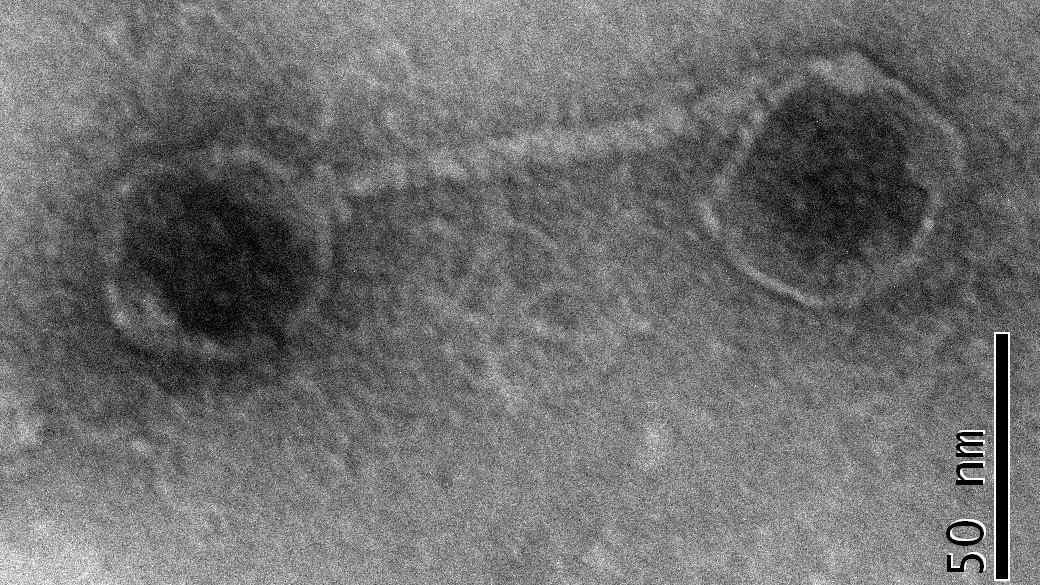
The Archaeal Virology Group, headed by Susanne Erdmann, investigates membrane vesicle formation in Archaea and the formation of plasmid vesicles and studies the interactions between membrane vesicles and viruses.
Max Planck Research Group Eco-Evolutionary Interactions

© Max-Planck-Institut für Marine Mikrobiologie/L. Wilkins
The Max Planck Research Group Eco-Evolutionary Interactions led by Dr. Laetitia Wilkins is studying how lucinid clams and their microbial partners adapted to diverging environmental conditions during a massive allopatric speciation event caused by the rise of the Isthmus of Panamá. Our motivation for doing research is to move from correlation to causation in studies of host-microbe evolution. As oceans undergo major changes due to human activities (for example ocean warming and acidification), understanding how animals and plants adapt to a changing environment is now more than ever one of the biggest questions in marine biology. To predict future responses, we can explore the past and use geological events, which provide valuable insights into adaptive mechanisms.
MARUM MPG Bridge Group Marine Glycobiology

The MARUM MPG Bridge Group Marine Glycobiology, headed by Dr. Jan-Hendrik Hehemann, focuses on certain algal sugars, so called polysaccharides. These polysaccharides are very important in the marine carbon cycle. The massively influence how much carbon is stored in the ocean. Despite their relevance the structures of algal polysaccharides and their recycling by marine microbes remain a mystery. To shed light on this black box of the marine carbon cycle Hehemann and his group study the functional evolution of the bacterial enzymatic machines and how they process algal polysaccharides in the ocean.
Max Planck Research Group Marine Isotope Geochemistry

The Max Planck Research Group Marine Isotope Geochemistry, headed by Dr. Katharina Pahnke-May, is focused on the understanding of past and present processes and changes in the ocean and the climate system. Particular interest of this collaboration between MPIMM and the Institute for Chemistry and Biology of the Marine Environment (ICBM, University of Oldenburg) lies in trace elements and their isotopes in the ocean, as well as their role as tracers of present and past element input and fluxes, geochemical processes, internal cycling, and past ocean circulation changes.
Department of Microbiology

The Department of Microbiology, headed by Prof. Dr. Friedrich Widdel, investigates the physiology and diversity of aquatic bacteria from the cycles of carbon, nitrogen, sulfur and iron. Investigations usually include the isolation of bacteria and their study under defined conditions in the laboratory. Characterisation of enrichment and pure cultures is often combined with the analysis of ribosomal nucleic acids, which is carried out in collaboration with the Department of Molecular Ecology. One major project is the study of the anaerobic degradation of long-lived natural products such as hydrocarbons, mostly by denitrifying and sulfate-reducing bacteria. Furthermore, the physiology of naturally abundant forms of sulfur-oxidizing and sulfate-reducing bacteria is of interest.